Friday, December 2, 2011

Holiday Season

November got away from us. The month opened with a Malian holiday and closed with an American one. We spent the first three weeks of the month in our village. The first weekend of November we celebrated Seli-Ba, aka Tabaski, the "Festival of the Sacrifice," the biggest Muslim holiday of the year in Mali.


While we have not researched the holiday in much depth, according to Wikipedia, Tabaski is a "religious holiday celebrated by Muslims worldwide to commemorate the willingness of Abraham to sacrifice his son as an act of obedience to God before God intervened to provide him with a sheep to sacrifice instead." In honor of the sacrifice, all Malian families who are able kill a sheep at home and share the meat with family and less fortunate neighbors. The day was filled with family time, religious blessings and lots of meat--liver and bread for a mid morning snack, grilled rib meat for lunch, stewed meat for dinner. Yum.

Seli-Ba Breakfast, Lunch and Dinner hanging from a tree in our host family's compound

The last week of November, we headed south to the region of Sikasso to celebrate Thanksgiving with our fellow PC Volunteers. Volunteers in the Sikasso region prepare a Thanksgiving feast every year - turkey, mashed potatoes, stuffing, green beans and pumpkin pie made from local squashes. Eight turkeys and three ducks were butchered the morning of Thanksgiving. Certainly the freshest turkey we have ever had.  

George with the turkeys on Thanksgiving Eve. They had no idea what was coming... 

No white linens or banquet tables for Thanksgiving this year. Just lawn chairs and boxed wine in plastic mugs. Turkey decorations courtesy of Tim and Lindsey's care package.


We are thinking of all of you this holiday season. Enjoy Advent. Stay Warm.


Monday, October 31, 2011

Ghana

Accra with high school pal, Victoria

We returned last week from a quick trip to Ghana for a little R&R and had a blast.  All African countries are not the same.  Ghana = futuristic.  I suppose it is relative to living in Mali, but it sure seemed as if we went fast-forward into the future as we drove toward Accra.  We went the budget route, and took a non-airconditioned 45-hour bus through Burkina Faso to Accra, Ghana complete with pitching a tent and camping on the Burkina/Ghana border waiting for the border to open for the day.  We stayed in Accra for a few days, ate ice cream and sea food, went to a great concert, and visited a friend of mine from high school in Lincoln, NE who is now working in Accra.  Following Accra we went down the coast to Cape Coast to spend 5 days at the beach.  Cape Coast has a rich and tragic history of colonization and being a slave trade hub, so we managed to squeeze in a slave castle tour.  I do not think we will take a 45 hour bus again, but would definitely recommend Ghana as a destination. 

Bands from the concert:
Alliance Français in Accra (outdoor concert venue)

Rainforest in Kakum Natl. Park

Canopy walk above the rainforest


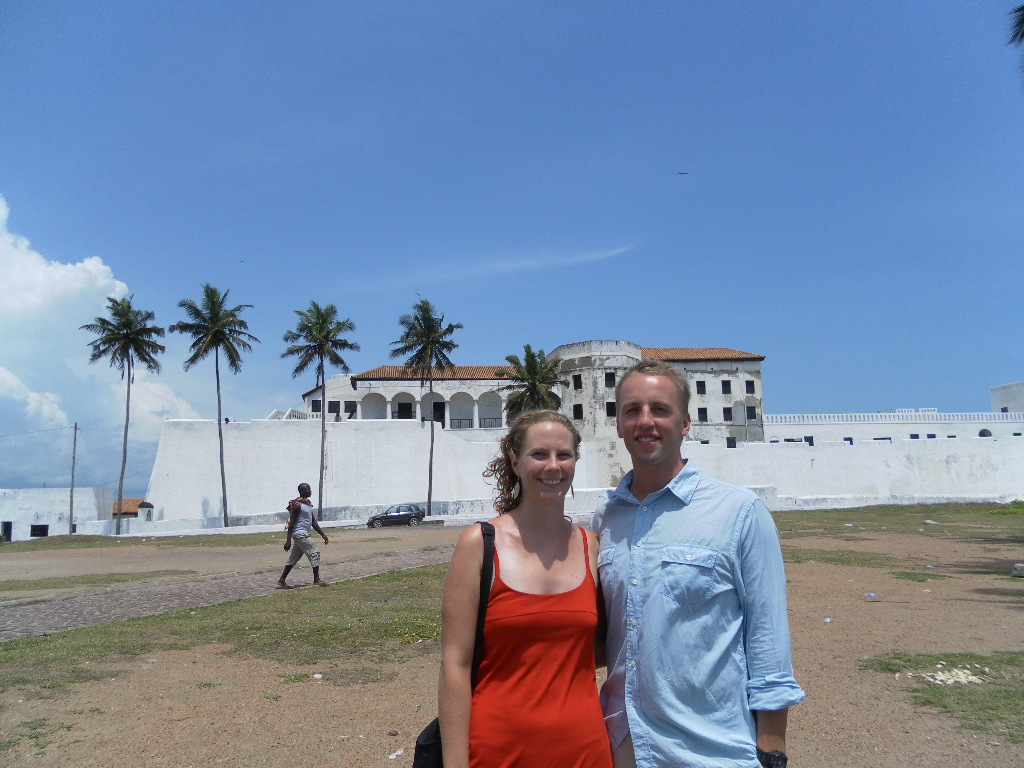
Dutch slave castle in Elmina


Castle courtyard

West Indies Trading Co. logo

Tiny room for starving misbehaving slaves to death


Anna (way too happy about all this)


3,000,000 slaves passed through this small doorway, now covered with iron bars, over the span of 300 years onto boats headed to America, the Caribbean, and Indonesia


Boat building seen from the ramparts of the castle

Bridge over the castle moat


Sunday, October 30, 2011

vignt-deux


September 22nd, Malian Independance Day, known simply as "vignt-deux," is THE biggest party of the year in our village. We invited two neighboring volunteers to join the festivities with us last month. The celebration begins with a soccer game in the afternoon of the 21st as people from neighboring villages flood into town. We brought in a ringer to join in the soccer game, a friend and neighboring volunteer who used to play in college. The village was extremely impressed to see a toubabu in action on the field. The eve of the 22nd, street food and dance parties in every neighborhood until dawn.

The morning of the 22nd, thanks to a well connected friend, we scored VIP seats to hear local government officials speak and watched a parade featuring tradional hunters and marchers from surrounding villages. Mid day - street food and treats not usually available at our weekly market. In the afternoon - canoe races on the Niger River, again viewed from VIP seats.


View of the town square from our VIP seats


The parade begins

Parade marchers ready for the canoe race


Watermelon season begins

The race

Friday, October 7, 2011

Fall

Well, it's officially autumn now and its signs are everywhere in the USA.  My baby sister is one month into college at St. Olaf where the trees are in peak fall-colors mode.  I have seen emails and pictures of pumpkins, sweatshirts, and leaf piles.  I have been checking on (unhappily after the Wisconsin loss) Nebraska Husker football scores.  Here, while it is autumn, there is no fall.  After rainy season, we are now in mini hot season before winter.  So it is back to 100-110 degree days.  Trees here are growing well, not shedding leaves.

Recently while trying to explain the autumnal climate in the USA, Anna told a Malian village woman that leaves fall off of the trees this time of year where we come from.  The response was priceless- the woman asked Anna, "Can you then gather them and eat them?"  Good question, I guess I don't know... 

(here there are many sauces for rice or millet dishes that are made primarily of leaves of various trees, there are also quite a few traditional medicines made with leaves, so her question was pretty reasonable, just funny for an American)

Anna's banana tree

Friday, September 16, 2011

slowly bringing out the camera

Dugutigi (Chief of our Village)


View of the Niger River from downtown in our village, unfortunately our mud house is not beach front

Public health, painting a mural at a health center

Mural audience

Traffic jam on a bridge


Moto Taxi- exactly what it sounds like


Mosquito nets ready to be distributed to all residents of the Segou region


Salim working the mosquito net distribution, families lined up to redeem their nets using a coupon system


Net distribution. These particular nets are treated with insecticide to kill the mosquito species that carries malaria.


Our front porch during a recent visit from a friend and fellow PCV

Thursday, September 15, 2011

Village Holiday


So after the most recent posting, you must think that we (and all Malians) tiredly trudge through village one day at a time wishing that we could be transported to a more comfortable climate controlled, hard wired life. While thoughts like these do often cross our minds, in some ways life in Mali is just like life anywhere else - the monotony of daily life is occasionally warmly interruupted by a fun life event - weddings, baptisms, summer vacation and holidays.

The fasting month of Ramadan (called Sunkalo in Bambara) came to a close at the end of August. Breaking the month long fast of Ramadan (no food or water from 4am-7pm for a month!) is celebrated with a feast day (Seli Fitini in Bambara, Eid ul-Fitr in Arabic), one of the most celebrated holidays in Mali. The largest feast day here is known as Seli Ba and will take place in early November this year.

The village was buzzing in preparation for Seli a few days prior to the feast. Going to the market the Saturday prior to the feast was like being in a grocery store the day before Thanksgiving or a toy store on Christmas Eve - Never again. I'd rather skip my weekly banana purchase than walk through the village market prior to Seli. Having a new outfit made is quite common, especially for children. The owner and his apprentices at our favorite tailor shop literally spent the night at the shop churning out clothes the two nights prior to Seli...apparently kids will cry if their outfits aren't ready.

As with all feasts, an important aspect is FOOD. Here, this means lots of meat, an expensive treat not consumed on a daily basis. So when my work counterpart and neighbor (named Capi) told us that he and his coworkers were all chipping in to butcher a cow together, we signed up too. The night before Seli, Capi gave the following instructions to George -- Meet at a specific corner of the village at 7am tomorrow. We will be butchering the cow at 4am. Oh, and bring your own bucket to haul your meat. Don't bring a bucket that you use for drinking water or your water will forever have a lingering taste of beef carpaccio.  George arrived to watch the 2nd half of the butchering, which consisted of using an axe to cut hunks of beef off of a cow split open on the ground and then divide up piles of meat on a large mat to be put into buckets to take home.

The other most important aspects of Seli are - prayer and visiting family, friends and neighbors to give blessings.


Prayer takes place outdoors, in designated places in the village (known as the Seli Kene). Our village has 2 Seli Kenes, we went to the largest one, near the banks of the Niger River. Seli is lead by the Imam, men and women praying in designated areas, all at the same time at about 9am. After a quick scramble to find Bintu a head scarf we walked across town to the Seli Kene.

Following the public prayer, the rest of the day consists of greeting friends and family, showering others with blessings, eating meat and other treats, listening to music, playing cards and relaxing.


The villagers most excited about greeting and blessings are kids - during Seli kids go door to door wishing adults a happy, healthy feast day and many more to come. In return, kids are given pocket change or candy. It reminded us of Halloween in America, minus the costumes.